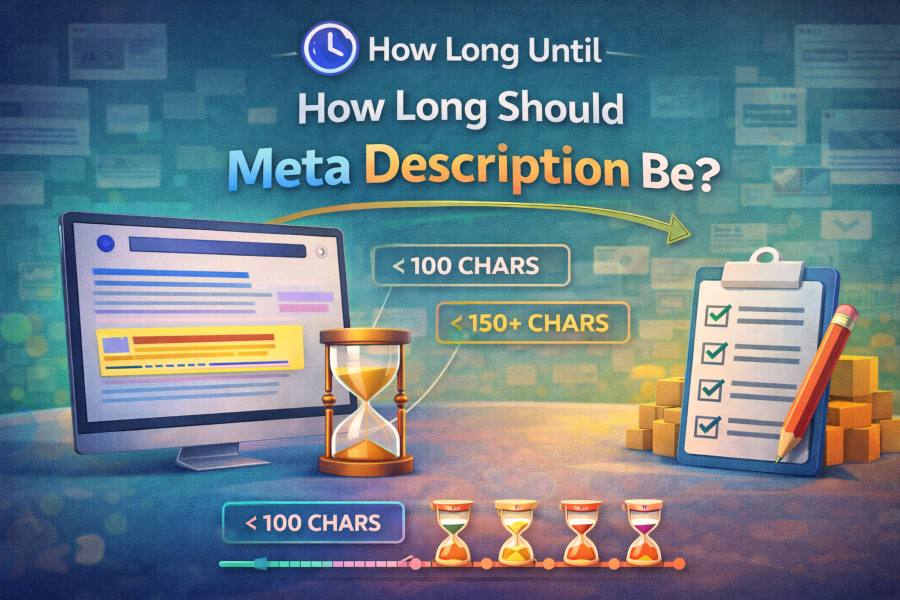
If you want higher click-through rates from search results, you need to understand how long should meta description be and why length directly affects visibility. Meta descriptions act as your search snippet pitch and help users decide whether to click your page or scroll past it.
When written correctly, they improve relevance, clarity, and engagement without triggering truncation or rewrites by search engines. This guide explains exact length recommendations, real-world behavior, and proven optimization strategies so you can craft descriptions that perform consistently and drive qualified traffic.
What a Meta Description Does in Search Results
A meta description summarizes your page content for users before they click, giving them context and confidence about what they will find. Although it is not a direct ranking factor, it heavily influences click-through rates and user engagement. When you understand how long should meta description be, you control how much of your message appears in search results and avoid losing key information to truncation.
Search engines use meta descriptions as a reference, but they may rewrite them if your version fails to match user intent or page content. That makes accuracy, clarity, and length equally important when crafting snippets. A properly sized description ensures the full message appears and supports consistent branding across your pages.
How Long Should Meta Description Be for SEO Today
The ideal answer to how long should meta description be is between 150 and 160 characters after spacing for desktop results. This range provides enough room to communicate value while staying within Google’s visible limits. Descriptions shorter than 120 characters often feel incomplete, while longer ones are frequently truncated.
Mobile results typically display fewer characters, so keeping descriptions concise helps preserve meaning across devices. Staying within the recommended range increases the chance that your entire message appears without being cut off. This balance allows you to include keywords, benefits, and context without overwhelming users.
Character Count vs Pixel Width Explained
Meta descriptions are truncated based on pixel width, not just character count, which is why length guidelines are ranges rather than fixed numbers. Wide characters like capital letters and symbols consume more horizontal space than narrow characters. This means two descriptions with the same character count can display very differently.
Understanding pixel width helps you avoid accidental truncation even when your description seems short enough. Tools that preview SERP snippets help you visualize how your text will appear before publishing. When you align pixel width with recommended character limits, your descriptions remain readable and complete.
Why Google Rewrites Meta Descriptions
Google may replace your meta description if it believes another on-page section better matches the user’s query. This often happens when descriptions are too long, too short, duplicated, or keyword stuffed. Matching search intent and page content reduces the likelihood of rewrites.
Rewrites can dilute your messaging and remove carefully written calls to action. Keeping descriptions relevant and within the ideal length increases the chance Google uses your version. Clear, concise summaries aligned with the page topic remain the most reliable approach.
Best Practices for Writing High-Click Meta Descriptions
Every page should have a unique meta description that accurately reflects its content. You should include the primary keyword naturally while focusing on benefits rather than repetition. Active language and clear outcomes help users understand what they gain by clicking.
Calls to action such as discover, explore, or find practical guidance encourage engagement when used naturally. Avoid vague phrases that do not add value or context. A strong description reads like helpful guidance rather than promotional copy.
Desktop vs Mobile Meta Description Length
Desktop search results generally display more characters than mobile results, which makes length optimization essential. A description that fits perfectly on desktop may still be truncated on smaller screens. Writing with mobile in mind ensures your message remains clear everywhere.
Aim for the core value to appear within the first 120 characters so it shows fully on mobile devices. This approach protects meaning even when truncation occurs. Consistent readability across devices supports stronger engagement metrics.
Common Meta Description Mistakes to Avoid
Leaving meta descriptions blank forces search engines to generate unpredictable snippets from page content. Using the same description across multiple pages weakens relevance and reduces click appeal. Overloading descriptions with keywords makes them unreadable and increases rewrite risk.
Another common mistake is failing to align the description with the actual page topic. Misleading snippets may increase bounce rates and damage trust. Accuracy and clarity should always come before creativity.
How Meta Descriptions Support Broader SEO Strategy
Meta descriptions complement titles, headings, and content by reinforcing topical relevance. When optimized correctly, they improve user signals like click-through rate and dwell time. These engagement signals help support long-term organic performance.
For example, clarity in snippets aligns with broader content strategies like improving usability and intent matching where structure and clarity drive better outcomes. A consistent approach across all metadata strengthens your site’s overall search presence.
Tools to Check Meta Description Length and Display
Preview tools allow you to test character count and pixel width before publishing. These tools simulate search results so you can adjust wording in real time. They help ensure your description is neither too short nor too long.
Using preview tools also prevents wasted space and missing context. This practice is especially useful when managing large sites with many pages. Consistent previews lead to consistent SERP appearance.
When Shorter Meta Descriptions Make Sense
Shorter descriptions can work well for branded searches or highly specific queries. In these cases, users already know what they want, so brevity supports faster decision making. However, the description should still communicate value clearly.
Even shorter descriptions should avoid being vague or incomplete. Every character should serve a purpose and reinforce relevance. Strategic brevity works only when intent is obvious.
Writing Meta Descriptions for Informational Content
Informational pages benefit from descriptions that clearly state what problem is addressed and what solution is offered. Avoid teaser language that hides the outcome or answer. Users prefer clarity when searching for explanations or guides.
This approach mirrors content clarity principles found in resources like where direct value improves engagement. Clear expectations lead to satisfied users and stronger performance.
Writing Meta Descriptions for Commercial Pages
Commercial and service pages should focus on outcomes, features, or differentiators. Highlight what sets the page apart without sounding overly promotional. Trust and transparency matter more than hype.
Including specific benefits helps users qualify themselves before clicking. This improves traffic quality and conversion potential. Precision beats exaggeration every time.
How Long Should Meta Description Be for Consistency Across a Site
Consistency matters when managing multiple pages or categories. Using a standard length range helps maintain visual alignment across search results. This uniformity supports brand recognition and professionalism.
Templates can help, but they should allow flexibility for page-specific details. Avoid rigid formulas that force awkward phrasing. Balance structure with relevance for best results.
Measuring the Impact of Meta Description Optimization
You can measure effectiveness through click-through rates in search performance tools. Comparing pages before and after optimization reveals which descriptions resonate with users. Small wording changes can lead to noticeable improvements.
Monitoring performance over time helps refine your approach. Meta description optimization is an ongoing process, not a one-time task. Data-driven adjustments deliver sustained results.
Adapting Meta Descriptions for Algorithm Updates
Search display behavior evolves, which means best practices should be reviewed periodically. While length guidelines remain stable, formatting and truncation patterns can shift. Staying informed helps you adapt quickly.
Flexible writing that prioritizes clarity over gimmicks remains future proof. When you focus on user intent, updates rarely disrupt performance. Strong fundamentals always win.
How Meta Descriptions Fit Into Technical SEO
Meta descriptions are part of a broader technical SEO foundation. Clean HTML, unique metadata, and accurate indexing support reliable snippet display. Technical errors can prevent descriptions from being used properly.
Ensuring crawlability and avoiding duplication enhances metadata effectiveness. Optimization works best when technical and content elements align. Strong foundations amplify small improvements.
Scaling Meta Description Optimization for Large Websites
Large websites benefit from systematic audits to identify missing or duplicated descriptions. Bulk updates should still preserve page-level relevance. Automation helps, but human review ensures quality.
Prioritizing high-traffic and high-value pages first delivers faster returns. Gradual optimization prevents disruption while improving overall visibility. Strategic scaling protects consistency.
The Role of Search Intent in Meta Description Length
Understanding search intent guides both wording and length decisions. Informational queries need clarity, while transactional queries need specificity. Matching intent reduces bounce rates and rewrites.
Intent-driven descriptions feel natural and helpful rather than forced. They also increase the likelihood that users find exactly what they expect. Alignment drives satisfaction.
How Long Should Meta Description Be for Maximum Click-Through Rate
The optimal length balances completeness with readability. Including too much information overwhelms users, while too little fails to persuade. The sweet spot remains within the recommended character range.
Testing different variations helps identify what resonates with your audience. CTR optimization relies on clarity, relevance, and emotional resonance. Precision matters more than length alone.
Conclusion
Understanding how long should meta description be allows you to control how your pages appear in search results and how users perceive them. The ideal range of 150 to 160 characters after spacing provides clarity without risking truncation or rewrites.
When you write concise, intent-matched descriptions that reflect real page value, you improve click-through rates, engagement, and long-term SEO performance in a sustainable way.